How to Evaluate a China CNC Service Supplier for Quality, Cost, and Reliability
Many buyers start with the same assumption when they look for a China CNC service supplier: lower cost is the main advantage. In reality, serious sourcing teams usually care about a broader set of outcomes. They want predictable quality, stable communication, realistic lead times, process flexibility, and a supplier that can support the project beyond a one-time prototype order. Cost matters, but cost without control often becomes expensive later through scrap, schedule loss, weak packaging, or repeated engineering clarification.
This guide is written for buyers, engineers, sourcing managers, founders, and operations teams who need a practical way to evaluate China CNC suppliers. The goal is not to claim that every supplier in China is excellent, and it is not to suggest that offshore sourcing is always the right answer. The goal is to show how capable suppliers can be identified, how weak suppliers usually reveal themselves, and how to structure selection around measurable decision criteria instead of marketing language.
If you only remember one point from this article, make it this: a strong supplier is rarely the one that promises everything immediately. A strong supplier is the one that asks the right questions early, explains its process clearly, and proves that machining, inspection, finishing, and delivery are being managed as one coherent system.
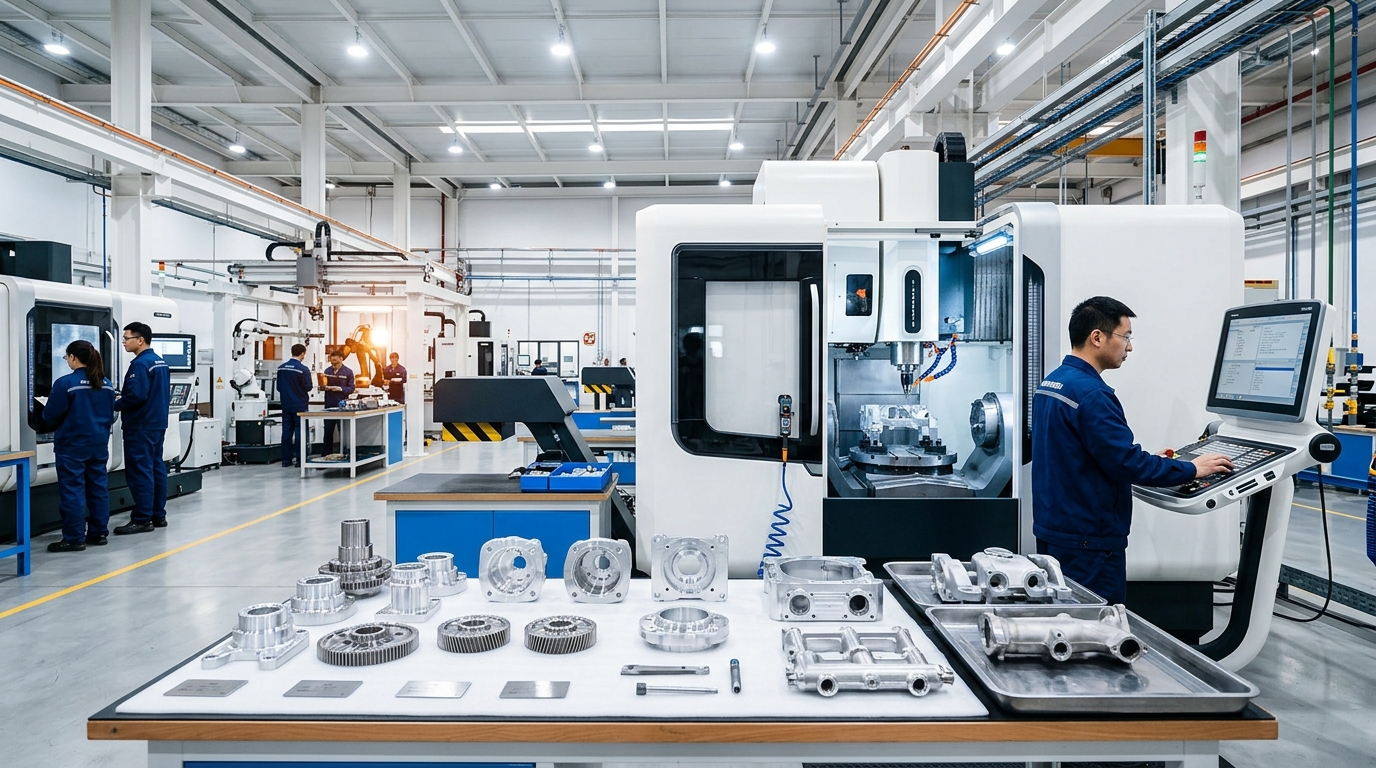
Article Strategy
This topic serves a commercial-investigative search intent. The reader is not only learning what CNC machining is. The reader is evaluating whether a China-based supplier is credible, whether the cost advantage is real, and how to reduce sourcing risk before a purchase order is released. Because of that, the article must stay tightly focused on supplier evaluation, quote comparison, quality control, logistics, and qualification logic.
The internal-link plan should move the reader deeper into the site where process, material, and application decisions become more specific. That is why this article links to CNC milling services, precision machining, aluminum CNC machining, stainless steel machining, and electronics applications. Those links support both the user journey and the topical structure of the site.
Authority signals should come from useful references, not from self-praise. Public resources from the National Institute of Standards and Technology help explain why traceability, calibrated measurement, and process discipline matter. Trade context from the U.S. Census Bureau Foreign Trade helps buyers frame sourcing decisions in a real supply-chain context.
Why Buyers Consider China CNC Suppliers in the First Place
China remains one of the most important global markets for custom CNC machining because it offers a dense manufacturing ecosystem. Buyers can often source milling, turning, EDM, secondary finishing, assembly, and packaging support within a relatively concentrated network. That density matters because it can reduce project friction. It can also shorten the time between RFQ review, engineering clarification, prototype delivery, and follow-on production.
However, the commercial case is not the same for every project. China sourcing is often a strong fit when the buyer needs custom metal or plastic parts, low-volume to mid-volume production, multiple post-processing steps, or a combination of speed and cost control. It may be a weaker fit when the project requires daily local engineering contact, highly restricted compliance pathways, or region-specific production controls that are easier to manage domestically.
| Why Buyers Look at China CNC Suppliers | Expected Benefit | What a Good Supplier Actually Delivers | Main Risk If Selection Is Weak |
|---|---|---|---|
| Competitive quoting | Lower total manufacturing cost | Pricing aligned with real process scope and manufacturability | Low initial price followed by hidden add-ons, delays, or rework |
| Broad manufacturing ecosystem | Fewer vendors to coordinate | Linked machining, finishing, inspection, and export handling | Fragmented subcontracting with weak accountability |
| Fast prototype support | Shorter product development cycles | Quick response plus meaningful DFM and schedule control | Fast quoting but poor technical review |
| Scalable production path | Smoother move from sample to repeat batches | Repeatability, revision control, and stable process ownership | Good prototype result that does not scale into consistent production |
Start With Part Fit, Not With Sales Claims
The first screen should be brutally simple: can this supplier machine the kind of parts you actually need? That question is more specific than it sounds. A supplier may say it offers 3-axis, 4-axis, and 5-axis machining, but those labels do not automatically prove fit for your geometry, tolerances, cosmetic requirements, or material mix.
Evaluation should start with your actual part family. Are you buying cosmetic aluminum enclosures, stainless steel fluid components, small turned brass parts, tight-tolerance fixture elements, or micro-scale details? The right supplier for one category may not be the right supplier for another. That is why experienced buyers compare supplier capability against real feature types, not generic capability lists.
For example, if your project is heavily driven by pockets, faces, contours, and multi-sided prismatic geometry, a supplier's real depth in CNC milling services matters more than a broad promise to machine anything. If the project depends on critical feature control, consistent tolerance logic, or surface-sensitive metal parts, then experience in precision machining becomes more relevant than headline machine count alone.
| Evaluation Area | What to Ask | Strong Signal | Weak Signal |
|---|---|---|---|
| Material fit | Which materials do you machine most often? | Specific discussion of grades, tooling behavior, and finish compatibility | Overly broad claims with no depth |
| Geometry fit | What similar part types have you produced recently? | Concrete examples by feature type and setup strategy | Generic phrases like "we can do all complex parts" |
| Tolerance fit | Which dimensions are routine and which need special control? | Explains tolerance confidence by feature and inspection method | Promises ultra-tight tolerances everywhere without context |
| Finish fit | How do you manage cosmetic surfaces and post-processing? | Understands masking, protection, handling, and variation | Treats finishing as a secondary detail with no clear process |
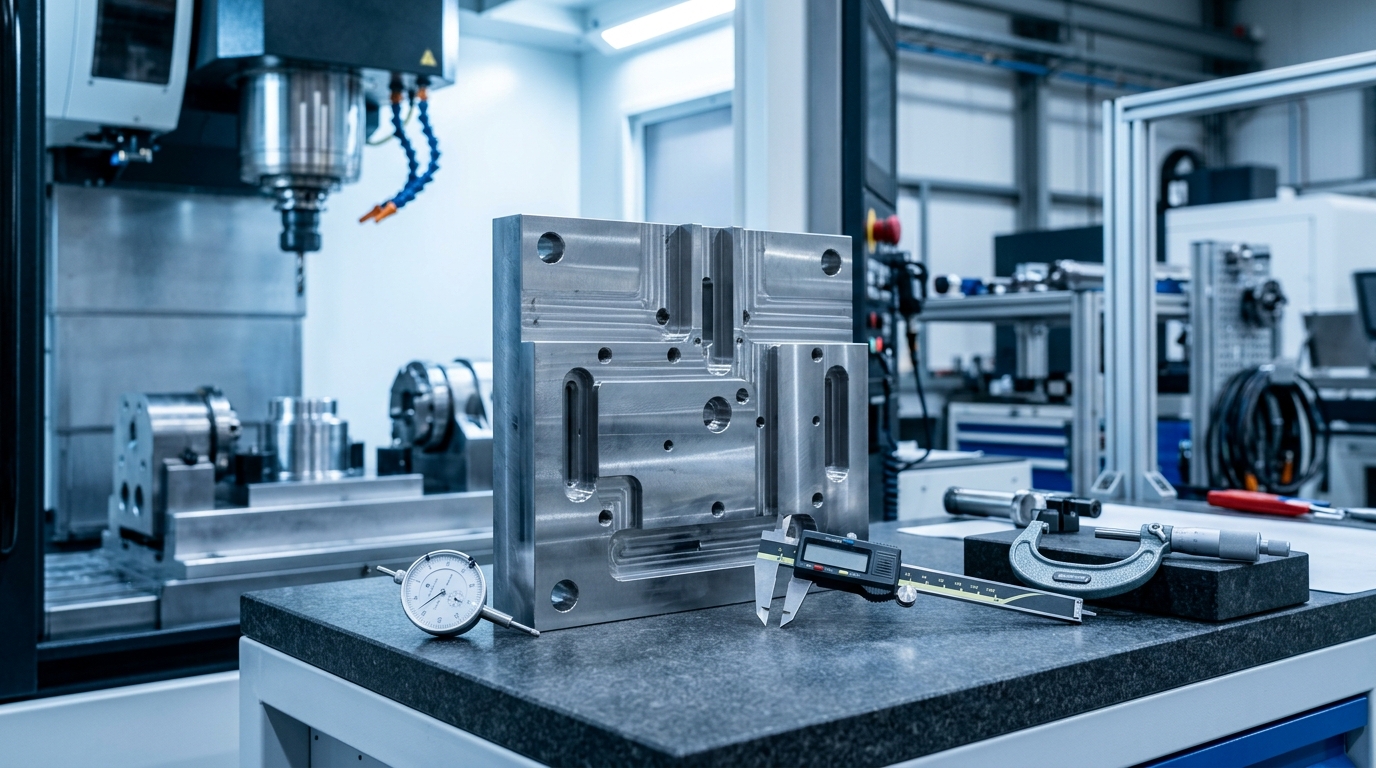
Quality Control Is More Than a Certification Badge
Many buyers ask whether a supplier is ISO certified, and that is a reasonable question. But certification alone should never end the conversation. Good evaluation goes deeper. Buyers need to understand how the supplier handles incoming material checks, drawing revision control, setup discipline, in-process inspection, final inspection, and shipment approval.
A capable supplier should be able to explain how critical dimensions are identified, how measurement is performed, what inspection records are available, and what happens when something falls outside tolerance. It should also be able to explain whether surface finishing is managed internally or through qualified partners, and how finished parts are protected before packing.
This is also where materials matter. If your part is driven by corrosion resistance, weight, or appearance, material guidance becomes part of quality planning. For example, a supplier helping you compare aluminum against stainless steel or other options should connect that advice to application needs, machinability, and finish outcome rather than defaulting to the cheapest stock.
In practice, the best suppliers often sound a little more cautious than the weakest ones. They ask where the sealing surfaces are. They ask whether the finish is cosmetic or functional. They ask whether the tolerance is global or limited to a few interfaces. Those questions are not a problem. They are often the clearest proof that the supplier is thinking about manufacturability before cutting material.
Communication Quality Affects Real Manufacturing Outcomes
Buyers sometimes treat communication as a soft issue and technical capability as the hard issue. In global CNC sourcing, that distinction breaks down quickly. Communication quality directly affects quote accuracy, drawing clarity, revision handling, schedule confidence, packaging instructions, and the speed of problem resolution.
Strong communication does not mean long email chains. It means clarity, discipline, and relevance. A good supplier confirms assumptions, identifies open points, acknowledges file revisions, and explains technical risk before it becomes a shipment problem. A weak supplier often answers quickly but vaguely, avoids drawing-specific questions, or gives different answers depending on who is replying.
| Communication Test | Why It Matters | Healthy Signal | Risk Signal |
|---|---|---|---|
| RFQ clarification | Shows whether the team truly reviewed the files | Asks about critical features, finish, or quantity assumptions | Sends a quote for a complex part with zero technical questions |
| Revision response | Prevents wrong-version production | Confirms file version and any cost or lead-time impact | Handles revisions casually with no version traceability |
| Problem escalation | Limits the damage when issues occur | Explains the issue, likely cause, and recovery path quickly | Minimizes bad news or delays disclosure |
| Project updates | Supports internal planning and stakeholder confidence | Provides concise updates with evidence or next steps | Only responds after repeated follow-up from the buyer |
How to Compare China CNC Quotes the Right Way
A quote is not just a number. It is a set of assumptions. That is why quote comparison should be done on normalized inputs and then reviewed for scope completeness. Buyers should ensure that all suppliers are quoting from the same drawing package, material specification, quantity, finish requirements, and logistics assumptions.
Then the real comparison starts. Does the quote include deburring, finishing, packaging, and inspection reporting? Does it mention excluded operations? Is the supplier helping reduce unnecessary cost by suggesting localized tolerances, material alternatives, or simpler geometry transitions? These are important signals. A very cheap quote may be efficient, or it may simply be incomplete.
It is also worth comparing process fit against application fit. A supplier that understands your end market often gives better commercial guidance. For example, buyers working on connectors, housings, or thermal components may benefit from reviewing related use cases under electronics applications to see how process selection, finish expectations, and material choice align with end-use constraints.
| Quote Review Factor | What to Check | Why It Changes Real Cost | Buyer Action |
|---|---|---|---|
| Scope completeness | Machining, deburring, finishing, inspection, packaging | Missing scope turns into later charges or delivery risk | Ask suppliers to state what is included and excluded |
| Tolerance interpretation | General tolerance versus critical dimensions | Overcontrolled parts cost more without adding value | Mark functional dimensions clearly |
| Material assumptions | Exact grade, temper, and certification needs | Material mismatch can affect performance and price | Specify approved materials up front |
| Freight logic | Courier, air, or ocean timing | Urgent shipping can erase unit-cost savings | Plan approvals early enough to avoid panic freight |
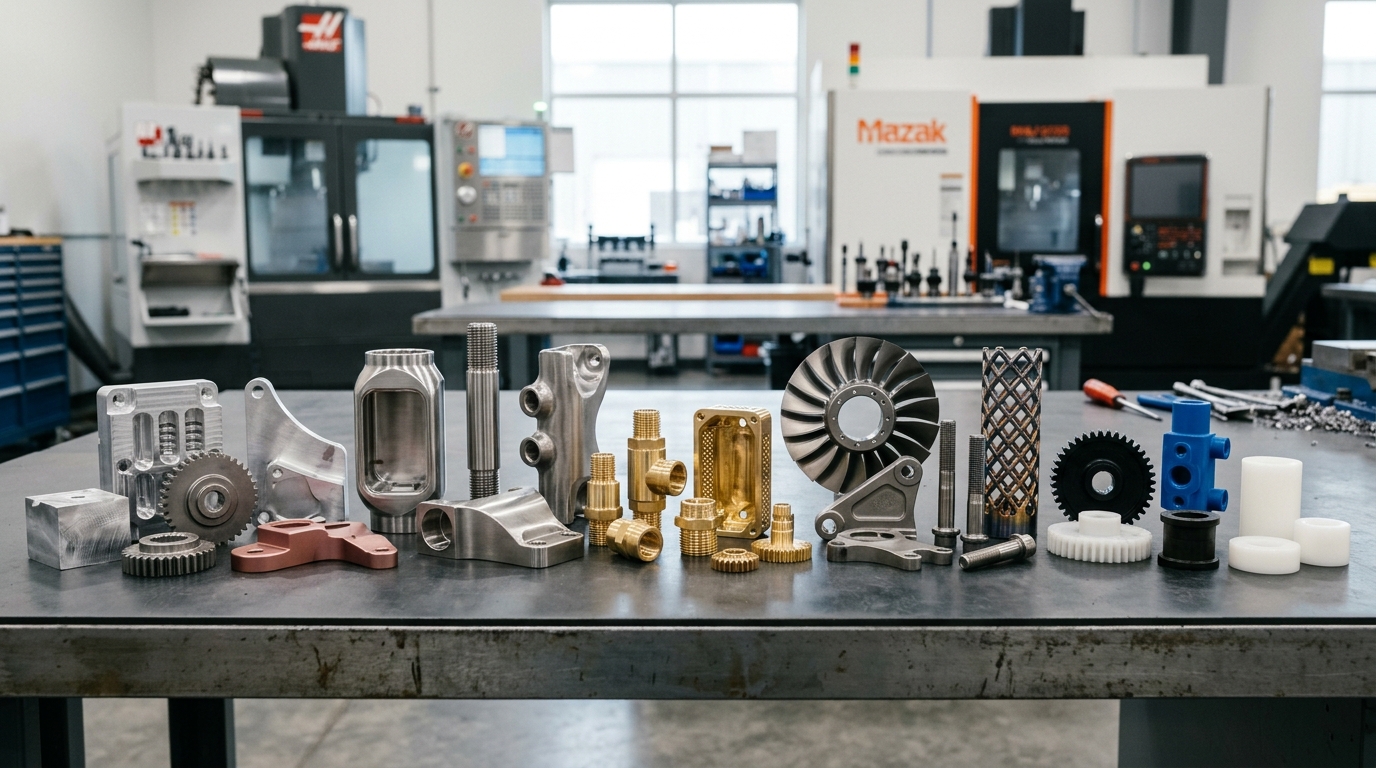
Prototype Success and Production Success Are Not the Same Thing
A supplier can sometimes deliver a good prototype and still be weak at repeat production. That happens because prototype orders can be managed with extra manual attention, selective inspection, and flexible scheduling. Production, even at low volume, demands more consistency. It requires documented setups, revision discipline, more stable planning, and repeatable inspection routines.
This is why buyers should qualify suppliers in stages. A prototype order is useful, but it should be treated as a test of the supplier's full operating behavior. Review not only the part quality, but also the DFM feedback, the accuracy of the quote, the credibility of the lead time, the clarity of the communication, the quality of the packaging, and the discipline of the shipment release process.
If the outcome is strong, the next step is usually not "commit all production immediately." The better next step is a controlled repeat batch, ideally one that tests the supplier's ability to maintain quality over multiple builds or support minor revisions without confusion.
Risk Reduction Strategy for New Supplier Qualification
Risk reduction does not require endless bureaucracy. It requires sequencing and evidence. Start with a bounded project that is meaningful enough to reveal technical and operational quality, but not so critical that one miss becomes commercially damaging. Define critical features, finish expectations, packaging requirements, and documentation needs before work begins.
Ask who owns the project. Ask how deviations are handled. Ask what the supplier considers standard versus special inspection. Ask how shipment damage is prevented. Buyers that define these checkpoints early usually see fewer surprises later.
- Start with a controlled first project rather than a large first order.
- Provide CAD and 2D drawings when the part includes important tolerances or surface requirements.
- Call out cosmetic surfaces, sealing features, and assembly interfaces explicitly.
- Ask for manufacturability feedback before approving the quote.
- Define packaging requirements before shipment, especially for cosmetic or delicate parts.
- Evaluate the supplier's process discipline, not just the geometry of the finished part.
What Good Long-Term Supplier Performance Looks Like
The best supplier relationships usually become more efficient over time because the supplier learns the buyer's quality standards, part families, finish expectations, and communication habits. That leads to better quotes, faster clarifications, cleaner documentation, and fewer avoidable issues.
However, a good relationship should still stay objective. Buyers should track lead-time accuracy, part quality, responsiveness, and total landed cost. Good suppliers usually welcome that level of review because it creates a more stable business relationship. Performance is easier to scale than vague goodwill.
If you are actively evaluating suppliers and want to move from article reading to a real project discussion, the next practical step is usually simple: send the drawing package and start a controlled quote review. That is where process quality becomes visible very quickly.
Conclusion
A China CNC service supplier should not be chosen because it is cheap, and it should not be rejected because it is overseas. The useful question is whether the supplier's technical fit, process discipline, communication quality, and operational ownership match the demands of your part and your business model.
The strongest suppliers usually share the same pattern. They ask smart questions early. They explain machining limits honestly. They document quality in a way that is readable and actionable. They align quotes with real scope. They protect the part through finishing, packing, and shipment. And they behave consistently across both prototypes and repeat work.
When buyers use those standards consistently, China CNC sourcing becomes less of a gamble and more of a structured manufacturing decision.
Frequently Asked Questions
How do I know if a China CNC service supplier is truly capable?
The best way is to compare the supplier's real strengths against your actual parts, materials, tolerances, and finish expectations. Look for specific technical answers, useful DFM feedback, and a controlled first project rather than broad claims.
Should I trust the lowest CNC quote from China?
Not automatically. A low quote may be competitive because of process efficiency, but it can also be missing finishing, inspection, packaging, or realistic assumptions. Scope completeness matters as much as unit price.
What documents should I ask from a CNC supplier during qualification?
Typical requests include first-article inspection reports, dimensional reports, material certificates, finish records when relevant, and shipment photos. The exact list depends on part criticality and end-use requirements.
Can a good prototype order prove the supplier is ready for production?
A good prototype is a strong sign, but it is not final proof of production readiness. Buyers should also verify repeatability, revision control, communication discipline, and packaging quality across follow-on builds.
What matters most in a long-term China CNC supplier relationship?
The most important factors are technical fit, process ownership, communication quality, inspection discipline, and reliable delivery behavior over time. Price matters, but consistent execution usually creates more value than the cheapest opening quote.