ServicesCNC Turning
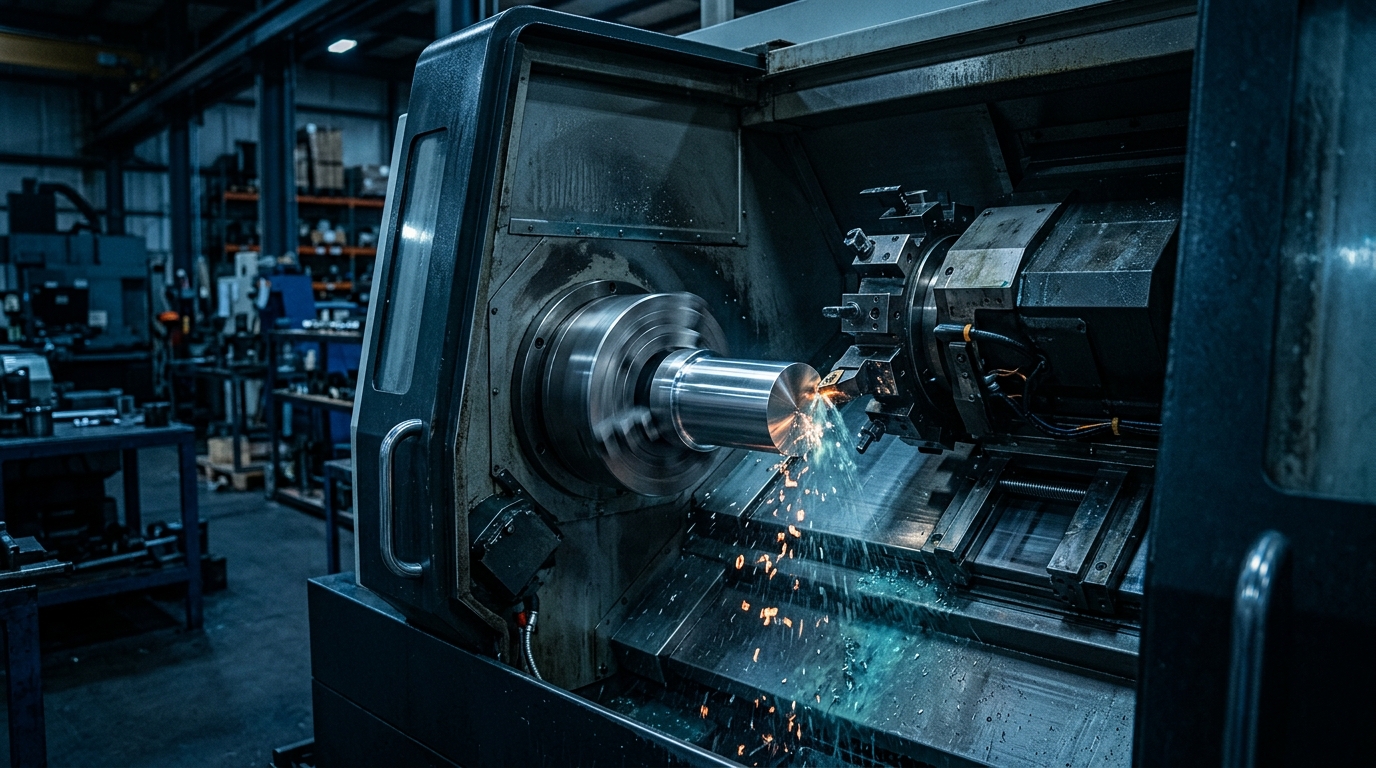
CNC turning for shafts, bushings, threaded parts, and round components.
Turning is the most efficient route for cylindrical parts and rotational geometry, especially when dimensional repeatability and clean cycle times matter.
CNC Turning
Lead time
As fast as 2 days
Tolerance
Down to +/-0.01 mm
Support
DFM + engineer review
Service Overview
A service page built around real sourcing and engineering decisions.
This page helps product teams understand when the process is the right fit, what risks should be checked, and how geometry, material, and production intent connect together.
Best for
01
Round or axial geometry
02
Repeatable production cycles
03
Tolerance control on diameters and coaxial features
Where it fits
Shafts, bushings, pins, spacers, and sleeves
Threaded parts and turned housings
Components with concentric bores and grooves
Key capabilities
Efficient turning for cylindrical and stepped components
Good fit for threads, grooves, and concentric bores
Strong repeatability for scheduled repeat orders
Common materials
SteelStainless steelAluminumBrassCopperNylon
What to verify
What buyers and engineers should validate before release.
Diameter tolerance and concentricity requirements
Thread definitions, surface finish, and burr expectations
Secondary milling or drilling needs after turning
What we prepare
What this service helps prepare for the next production step.
Turned parts with clean rotational accuracy
Support for prototype runs and repeating supply
Process guidance for thread, groove, and bore features
FAQ
Common questions about this CNC service.
What parts are commonly made with CNC turning?
Typical turned parts include shafts, bushings, pins, threaded adapters, sleeves, spacers, and cylindrical housings.
When is CNC turning better than milling?
Turning is usually the better choice when the part is primarily round or axial because it can machine diameters and concentric features more efficiently.
Can turned parts also include secondary features?
Yes. Many turned parts also require milling, cross holes, flats, or slotting depending on the final part function.
CNC Turning
Need turned parts with stable diameters and fast repeat cycles?
Share your drawing package and we will review turning efficiency, feature sequencing, and secondary machining needs.