CNC Prototyping for Medical Device Teams in the United States
Medical device development in the United States operates under unusually high pressure. Teams are expected to move quickly, document carefully, manage supplier risk, protect patient safety, and make smart manufacturing decisions before a product reaches pilot production or commercial launch. In that environment, CNC machining remains one of the most dependable tools for prototype development. It gives engineering teams a practical way to validate geometry, test assemblies, review ergonomics, inspect tolerances, and prepare for downstream manufacturing without waiting for production tooling.
For U.S. medical device companies, CNC prototyping is not just about getting parts made. It is about making better decisions earlier. Whether a team is based in Minneapolis, Boston, San Diego, Irvine, Salt Lake City, Austin, or the Research Triangle, the same core questions show up again and again. Which materials should be used at the prototype stage? When is machining better than molding or 3D printing? What tolerances are realistic for critical interfaces? How should supplier qualification be approached when a program may later move into larger-scale production? And how can a team get useful prototype parts without creating unnecessary quality or regulatory headaches?
This guide answers those questions from the perspective of real program needs. It focuses on how U.S. device developers use CNC machining for concept models, functional prototypes, verification builds, surgeon-evaluation units, pilot batches, and pre-production learning. It also explains the quality mindset needed for regulated industries, the common cost drivers, and the supplier selection criteria that matter when risk is high and timelines are short.
For official reference on manufacturing quality systems in medical products, teams often review FDA guidance on medical device quality system requirements and NIST resources on U.S. manufacturing measurement and standards. These references help frame why prototype quality planning is so important long before volume production begins.
Why CNC Prototyping Matters in Medical Device Development
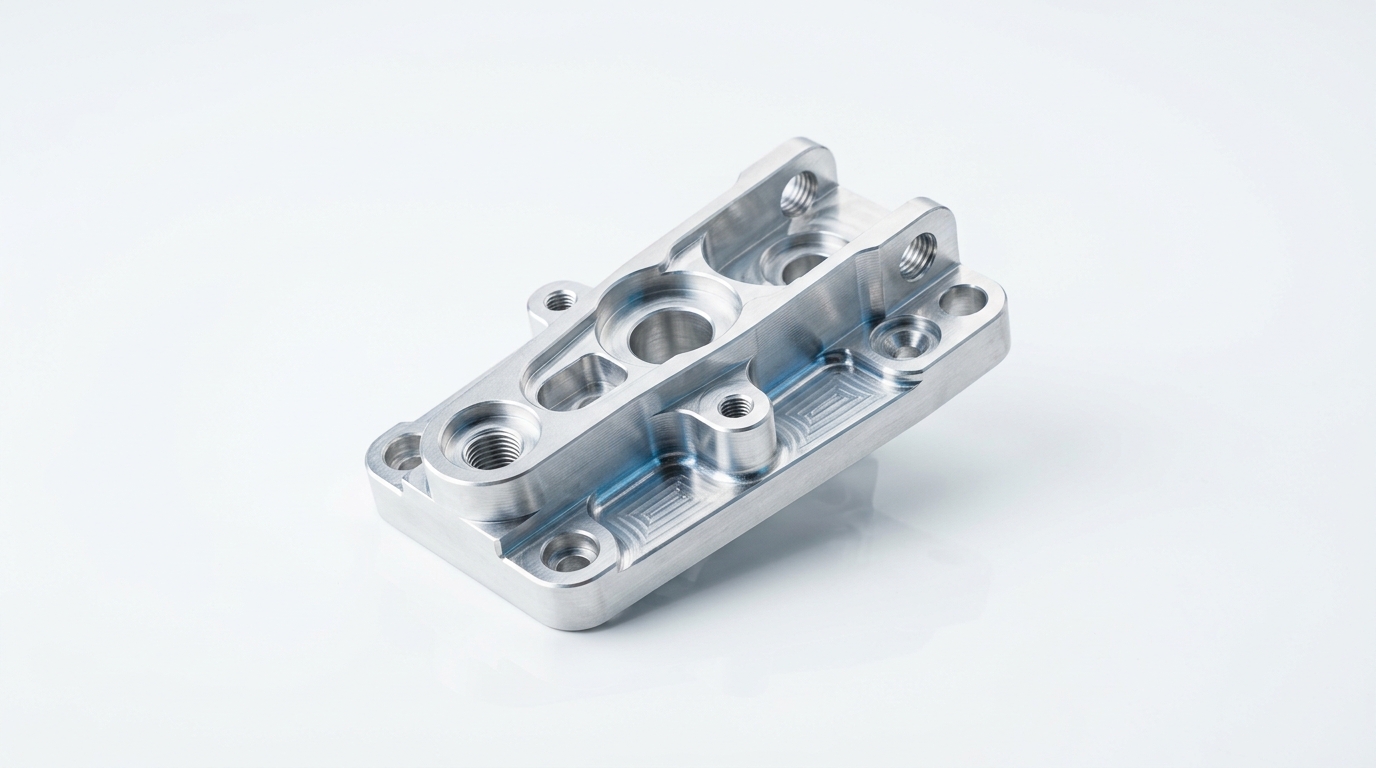
CNC machining is especially valuable in medical device development because it closes the gap between digital design and physical verification. CAD models can predict many things, but they cannot fully replace hands-on evaluation of a real component. When a device includes precision bores, sealing faces, threaded interfaces, mating housings, fixture points, instrument shafts, ergonomic touch surfaces, or assembly-critical datums, machined parts provide a level of realism that is difficult to match with rough prototype methods.
In the U.S. market, this matters because development stages often involve multiple stakeholders with different priorities. Mechanical engineers care about fits and tolerances. Manufacturing engineers care about repeatability and process risk. Quality teams care about inspection strategy and traceability. Clinical teams care about usability and handling. Procurement teams care about lead time and supplier reliability. CNC prototypes help all of those groups make decisions based on a physical part instead of assumptions.
A well-executed CNC prototype program can reduce the risk of late-stage redesign. It can reveal stack-up issues before verification builds. It can show where tolerances are too tight or too loose. It can expose cosmetic expectations that were never formally documented. It can also help teams decide whether a part should remain machined in low volumes or eventually shift into molding, casting, or another process.
| Development Stage | Typical Prototype Goal | Why CNC Helps | Main Deliverable |
|---|---|---|---|
| Concept exploration | Validate form, envelope, and assembly direction | Fast production of realistic solid parts | Physical concept units |
| Functional prototyping | Check fit, motion, interfaces, and structural features | Tighter dimensional control than rough prototype methods | Functional engineering prototypes |
| Verification preparation | Refine critical features and inspection approach | Supports real tolerance and finish evaluation | Pre-verification builds |
| Pilot manufacturing | Produce limited quantities for process learning | Useful when tooling is not yet justified | Small-batch pilot parts |
| Bridge supply | Cover early demand before production tooling matures | Stable low-volume output with controlled revisioning | Short-run commercial parts |
The table above shows why CNC prototyping is not just a design convenience. It often becomes part of the quality and launch strategy for the whole program.
Where U.S. Medical Device Teams Commonly Use CNC Machining
Medical device products vary widely, but CNC prototyping appears repeatedly in several categories. Surgical tools use machined handles, clamps, jaws, shafts, and body features. Diagnostic systems use enclosures, mounts, brackets, fluid blocks, and instrument carriers. Implant-related systems use fixtures, trial instruments, and precision support components. Lab and benchtop devices use structural parts, chambers, alignment hardware, and operator-facing assemblies. Even when the final commercial product includes molded housings or sheet metal panels, CNC machining is often used first because it gives the team more flexibility during fast design iterations.
In cities with dense medtech ecosystems such as Minneapolis, Boston, Orange County, and the Bay Area, teams often use CNC prototypes for surgeon feedback, in-house testing, packaging trials, and verification fixtures. These are all high-value steps because a mistake discovered after tooling release is much more expensive than a mistake discovered during prototype learning.
Another important use case is companion manufacturing. A product may include one machined aluminum chassis, one stainless insert, several molded parts, and one transparent cast cover. In that situation, machining is not acting alone. It is the anchor process that helps the rest of the system come together while the program is still evolving.
Materials Commonly Used for Medical Device Prototypes
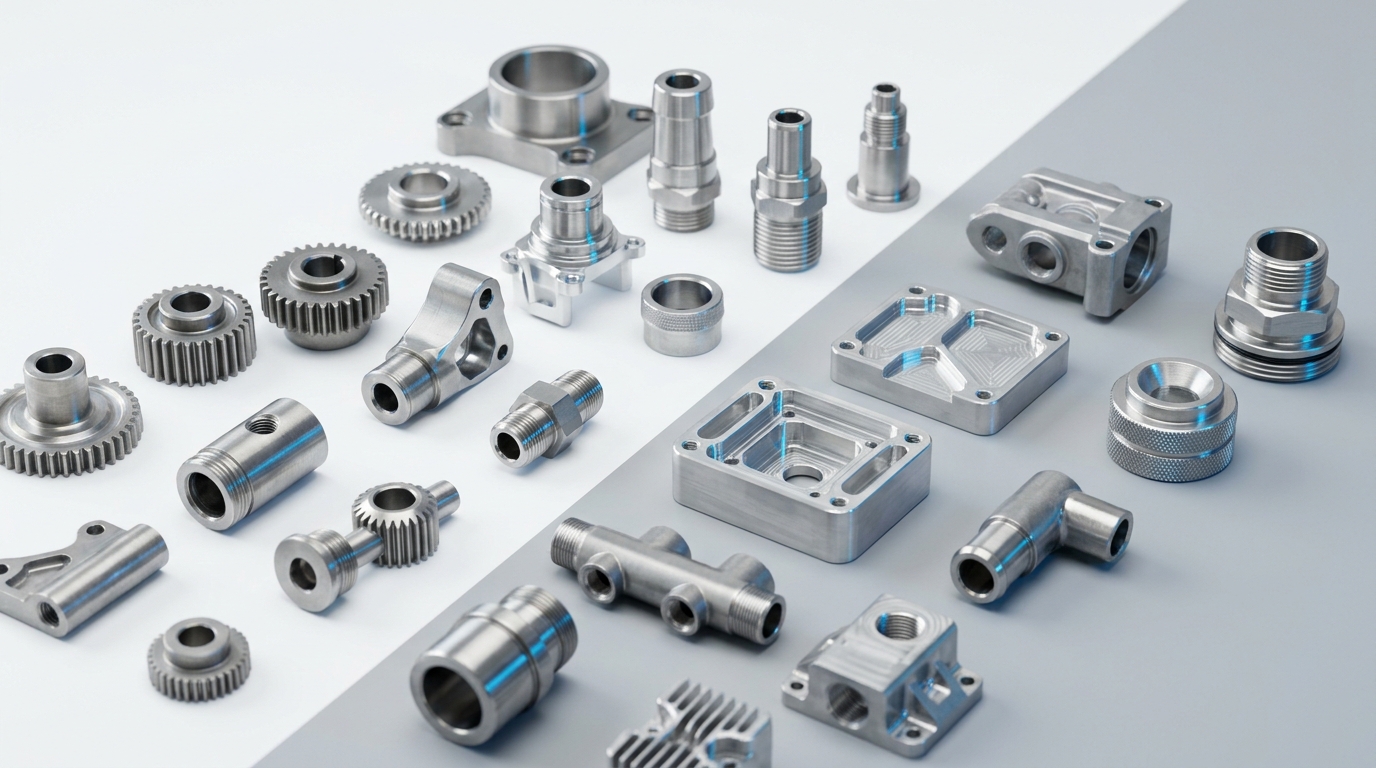
Material selection in medical prototyping is not only a mechanical decision. U.S. device teams usually choose materials based on the purpose of the build. A usability prototype may prioritize appearance and light weight. A functional test unit may prioritize stiffness, thermal performance, or cleanability. A surgeon-evaluation instrument may need corrosion resistance and a premium tactile finish. A fixture part may simply need dimensional stability and quick machinability.
Aluminum is frequently used for housings, supports, handles, and structural prototype parts because it is easy to machine and can be finished attractively. Stainless steels are common when corrosion resistance, cleaning compatibility, and higher strength matter. Brass and copper are less common in external device parts but can appear in fittings and conductive subsystems. Engineering plastics such as POM, PEEK, PC, and Ultem can also be machined when the prototype needs electrical isolation, lightweight behavior, chemical resistance, or a closer match to final polymer performance.
What matters most is selecting the material that answers the test question. If the team needs to learn about ergonomics and overall packaging, an expensive premium material may be unnecessary. If the team needs to validate sealing performance or interface geometry under repeated handling, then material choice becomes much more important.
| Material | Why U.S. Teams Use It | Typical Prototype Application | Watch-Out |
|---|---|---|---|
| Aluminum 6061 | Fast machining, stable geometry, attractive finishing | Device housings, brackets, carts, fixtures | May not represent final polymer product feel |
| Aluminum 7075 | Higher strength for performance-critical parts | Load-bearing supports, instrument structures | Higher cost than 6061 without always adding value |
| Stainless Steel 304 | Corrosion resistance and clean appearance | External hardware, instrument bodies, housings | Longer machining cycles than aluminum |
| Stainless Steel 316 | Preferred for higher corrosion resistance and harsher cleaning exposure | Medical contact-adjacent assemblies, fluid-path hardware | Higher cost and slower throughput |
| POM / Delrin | Dimensionally stable, low friction, easy to machine | Jigs, moving guides, sliding features | Not suitable when high heat resistance is needed |
| PEEK | High-performance engineering polymer for demanding environments | Insulators, structural plastic prototypes, specialty assemblies | Material cost is significantly higher |
| Polycarbonate | Useful for transparent or impact-resistant prototype needs | Covers, shields, display windows | Surface scratching may affect presentation quality |
The best prototype material is the one that delivers the right learning with the least unnecessary cost. That sounds simple, but in medical development it is often overlooked because teams try to answer too many questions with one build.
When CNC Is Better Than 3D Printing or Molding
U.S. medical device developers rarely use only one prototype process. The strongest teams match the process to the decision. 3D printing is useful for quick form studies and internal iterations. Vacuum casting is useful for low-volume plastic parts with higher cosmetic requirements. Injection molding becomes relevant when geometry is stable and volume justifies tooling. CNC machining sits in the middle as the most reliable choice when dimensional realism, interface precision, material behavior, or pilot quantity matters.
If a team needs threaded metal interfaces, flat sealing faces, stable bores, consistent mechanical datum structure, or well-controlled mating conditions, machining is usually the right answer. It is also useful when a part may eventually remain machined in commercial low volumes, which is common in capital equipment, premium instruments, accessories, service parts, and some regulated hardware.
| Process | Best Use in Medtech | Main Strength | Main Limitation |
|---|---|---|---|
| 3D printing | Early shape review and very fast iteration | Fast turnaround and low setup burden | Limited dimensional realism for critical interfaces |
| CNC machining | Functional prototypes, fixtures, pilot units, precision assemblies | Excellent dimensional control and realistic material behavior | Higher cost than rough concept printing |
| Vacuum casting | Low-volume cosmetic plastic prototypes | Good appearance and modest tooling cost | Limited mold life and resin constraints |
| Injection molding | Validated geometry moving to volume production | Best economics at scale and real production polymers | High tooling investment and slower change cycles |
In practice, many U.S. programs use all four at different stages. The mistake is treating them as interchangeable. They are not. Each one supports a different kind of confidence.
Quality Planning and EEAT in Medical Manufacturing Content
Because the target reader is typically an engineer, manufacturing lead, supplier quality professional, or technical buyer, content for this topic must be more than generic marketing. To align with Google EEAT principles, the information needs practical specificity, credible terminology, and a clear understanding of real-world manufacturing and quality tradeoffs. That means discussing tolerance strategy, revision control, inspection planning, documentation, supplier communication, and regulatory awareness in a grounded way.
For U.S. medical programs, quality planning starts earlier than many first-time teams expect. Even if a prototype is not a final production unit, it still shapes decisions about drawing clarity, inspection methods, finish expectations, cleaning assumptions, handling risk, and supplier capability. If a prototype is built carelessly, it can create false confidence. If it is built too strictly, it can waste time and budget without producing better learning.
A better approach is risk-based planning. Teams should identify which dimensions are critical to function, which surfaces matter to users, which interfaces affect assembly, and which prototype characteristics are merely nice to have. That allows the supplier to quote and produce the part intelligently instead of treating every feature as equally important.
Revision control is also critical. In regulated development environments, confusion between revision A and revision B can create schedule damage, scrap, and documentation headaches. Prototype suppliers should be given clear file naming, release notes, and drawing updates. The most effective relationships usually include a brief DFM conversation rather than only email attachments and a purchase order.
Tolerances, Finishes, and Inspection Strategy
Medical device teams often over-specify prototypes. This happens for understandable reasons. When risk is high, the instinct is to tighten every dimension. But uniform tight tolerance does not always improve learning. It often increases machining time, inspection burden, and cost while obscuring which dimensions truly matter.
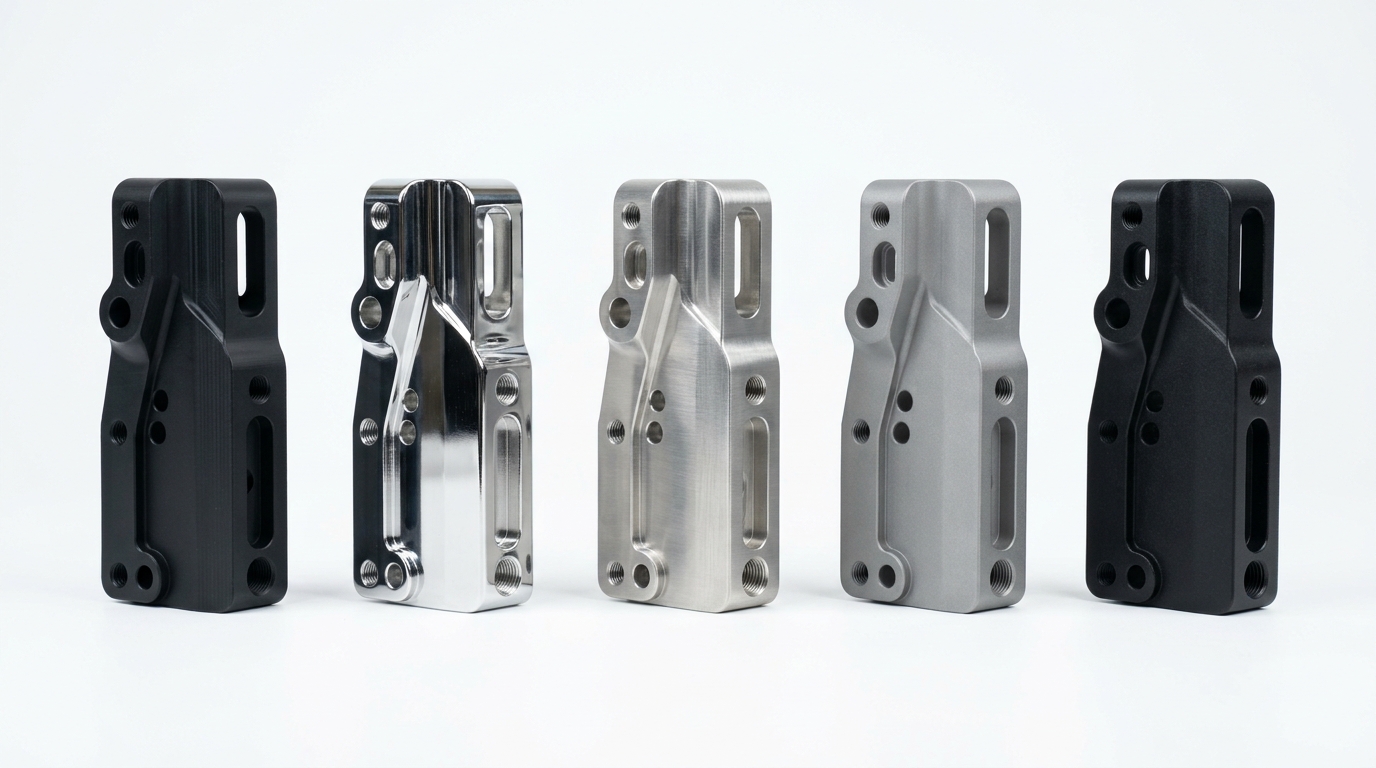
Instead, teams should separate functional tolerances from general tolerances. Critical bores, bearing fits, latch interfaces, fluid seals, datum relationships, and alignment faces deserve extra attention. Cosmetic hidden surfaces usually do not. The same logic applies to finish. A visible handheld housing may need bead blasting, brushing, anodizing, or electropolishing. An internal mount plate may only need deburring.
| Requirement Category | Typical Prototype Need | Recommended Approach | Common Mistake |
|---|---|---|---|
| General dimensions | Stable assembly and reasonable repeatability | Use standard tolerances where function allows | Applying ultra-tight tolerances everywhere |
| Critical interfaces | Reliable mating, alignment, or sealing | Mark clearly on drawing and discuss directly with supplier | Assuming the supplier will infer importance automatically |
| Cosmetic surfaces | User-facing quality and perceived value | Define appearance zones and approved finish direction | Leaving cosmetic requirements vague |
| Inspection records | Evidence for key prototype learning | Request dimensional checks on high-risk features | Asking for full documentation on low-risk trial parts |
For many U.S. teams, a smart prototype package includes a STEP file, a controlled 2D drawing, a short note describing the purpose of the build, highlighted critical dimensions, finish notes, and any known downstream manufacturing intent. That package gives the supplier enough context to offer useful feedback instead of simply pricing geometry.
Cost Drivers in CNC Prototyping for Medical Devices
Prototype cost is shaped by more than part size. Material, machine time, setup count, surface finish, critical inspection, documentation, and lead time pressure all influence the final price. Geometry is often the biggest hidden driver. Thin walls, deep pockets, awkward internal corners, tight bores, multi-side machining, and special fixturing all push cost upward.
For U.S. medical programs, another hidden cost driver is indecision. When a team sends incomplete drawings, unclear revisions, or contradictory notes, the supplier either prices conservatively or loses time clarifying. Both outcomes slow the program. Prototype spending is usually better controlled when the team is explicit about what it must learn from the build.
A second overlooked factor is finish and appearance. A part that needs presentation-grade anodizing, bead blasting, edge refinement, or electropolish should be planned differently from a part that only needs dimensional validation. These are not the same prototype jobs, even if the geometry is identical.
Supplier Selection for U.S. Medical Device Programs
Selecting a prototype supplier for medical products is not only about speed. Teams need confidence that the supplier understands technical communication, revision discipline, inspection expectations, and finish quality. The strongest prototype suppliers also understand transition logic. They know which prototype choices are merely temporary and which ones affect long-term manufacturability.
For U.S. buyers, supplier evaluation usually comes down to five areas. First is engineering communication. Can the supplier ask the right questions before cutting metal? Second is process range. Can it handle milling, turning, micro features, and finishing in a coordinated way? Third is quality discipline. Can it provide useful inspections on request? Fourth is responsiveness. Can it support quick changes without confusion? Fifth is scale pathway. If the prototype succeeds, can the same partner support bridge builds or related manufacturing processes?
One practical advantage of integrated suppliers is reduced coordination overhead. A program may need machined metal parts, machined plastics, secondary finishing, assembly support, protective packaging, and later process expansion into molding or sheet metal. If those capabilities are fragmented across too many vendors, schedule risk rises quickly.
| Supplier Evaluation Factor | Why It Matters in Medtech | What U.S. Buyers Should Ask |
|---|---|---|
| Engineering support | Reduces design and manufacturability mistakes early | What issues do you see in this revision before machining begins? |
| Inspection capability | Supports confidence on critical interfaces | Can you provide measured results on our key dimensions? |
| Finish quality | Affects user-facing evaluation units and stakeholder review | Can you share examples of comparable cosmetic finishes? |
| Revision control | Prevents scrap and confusion in regulated environments | How do you confirm the active drawing revision for production? |
| Scale path | Helps avoid supplier changes after prototype success | Can you support pilot lots and related secondary processes later? |
For buyers in the United States, a balanced sourcing model often works best. Some teams keep highly sensitive builds local for speed and in-person collaboration, while using qualified overseas partners for cost-effective pilot or repeat low-volume work. The correct model depends on urgency, quality requirements, internal resources, and the level of process integration needed.
Prototype Documentation That Actually Helps
Prototype documentation should support decisions, not create noise. In medical development, it is tempting to require production-grade paperwork too early. That can make sense for some validation phases, but it is not necessary for every exploratory build. A more efficient strategy is to match documentation depth to prototype purpose.
For example, an early ergonomic concept might only need confirmation of material, revision, and basic dimensional fidelity. A functional pre-verification build may need measured dimensions on critical bores, material traceability, and finish confirmation. A pilot lot supporting process transfer may require much stronger control, inspection structure, and part identification discipline.
When teams define the purpose clearly, they also write better RFQs. That improves quote quality, reduces back-and-forth, and usually lowers total project friction.
Common Mistakes U.S. Teams Make in CNC Prototype Programs
The first common mistake is asking one build to answer too many questions. A team may want the same set of parts to validate tolerance, cosmetic appearance, cleaning durability, packaging, and final user feel. Sometimes that is possible, but often it is more efficient to split objectives across stages.
The second mistake is over-tightening tolerances globally. The third is under-communicating cosmetic intent. The fourth is failing to provide enough context on the real use of the part. The fifth is choosing a supplier based only on quoted price without evaluating communication quality and process depth.
Another mistake is ignoring downstream transition. If a team knows a part is likely to move into molding or sheet metal later, that should be considered during machining-stage DFM. Otherwise, the prototype may validate a shape that is difficult or expensive to scale through the intended production process.
How a Good CNC Prototype Program Supports Launch Readiness
A strong prototype program shortens the path to launch because it improves decision quality. It helps engineering teams converge faster. It gives quality teams earlier insight into inspection logic. It gives sourcing teams a better understanding of supplier capability. It helps management see whether the program is learning efficiently or simply burning budget.
For U.S. medical device organizations, this matters because delays often come from uncertainty, not only from manufacturing lead time. When the team can hold a real part, inspect it, assemble it, and discuss it with shared evidence, uncertainty drops. The result is usually better cross-functional alignment and fewer surprises when the program moves toward verification, validation, or initial commercial builds.
That is why CNC prototyping remains so important even as digital tools become more advanced. Simulation is powerful. So is additive manufacturing. But for many medical device decisions, a real machined part is still the fastest route to confidence.
FAQ
Why do U.S. medical device teams still use CNC machining when 3D printing is faster?
Because CNC machining delivers more realistic dimensional control, better surface quality, and truer material behavior for critical interfaces, assemblies, and functional testing.
What materials are most common for medical device CNC prototypes?
Aluminum 6061, stainless steel 304 and 316, POM, PEEK, and polycarbonate are among the most common choices, depending on whether the team is validating structure, corrosion resistance, usability, or polymer-like behavior.
When should a medical device prototype stay machined instead of moving to molding?
It often makes sense to stay with machining when annual volume is low, geometry changes are still likely, lead time flexibility matters, or the part is a precision metal component that may never benefit from molding economics.
How much documentation should be requested on a prototype build?
That depends on the build purpose. Early concept parts may need minimal documentation, while pre-verification or pilot builds may need stronger dimensional records, revision control, and material confirmation.
What are the biggest cost drivers in medical CNC prototyping?
Material choice, machine time, setup complexity, tight tolerances, cosmetic finishing, inspection requirements, and expedited scheduling are the biggest cost drivers.
How should U.S. teams choose a CNC prototype supplier for medical products?
Look for engineering communication, inspection capability, finish quality, revision discipline, and a credible path from prototype to pilot or low-volume production if the program succeeds.
Can CNC machining support pilot builds before full production tooling is ready?
Yes. Many U.S. medical teams use CNC machining for bridge quantities, verification support, and limited pre-commercial builds when tooling is not yet justified or not yet ready.
What is the main quality mistake teams make with prototype drawings?
The most common mistake is treating every dimension as equally critical instead of highlighting true functional interfaces, cosmetic zones, and inspection priorities.
For U.S. medical device teams, CNC prototyping works best when it is treated as a structured learning tool rather than a simple purchase. The more clearly a team defines the objective of each build, the more useful the parts become. That is the difference between prototypes that merely consume budget and prototypes that actively reduce launch risk.