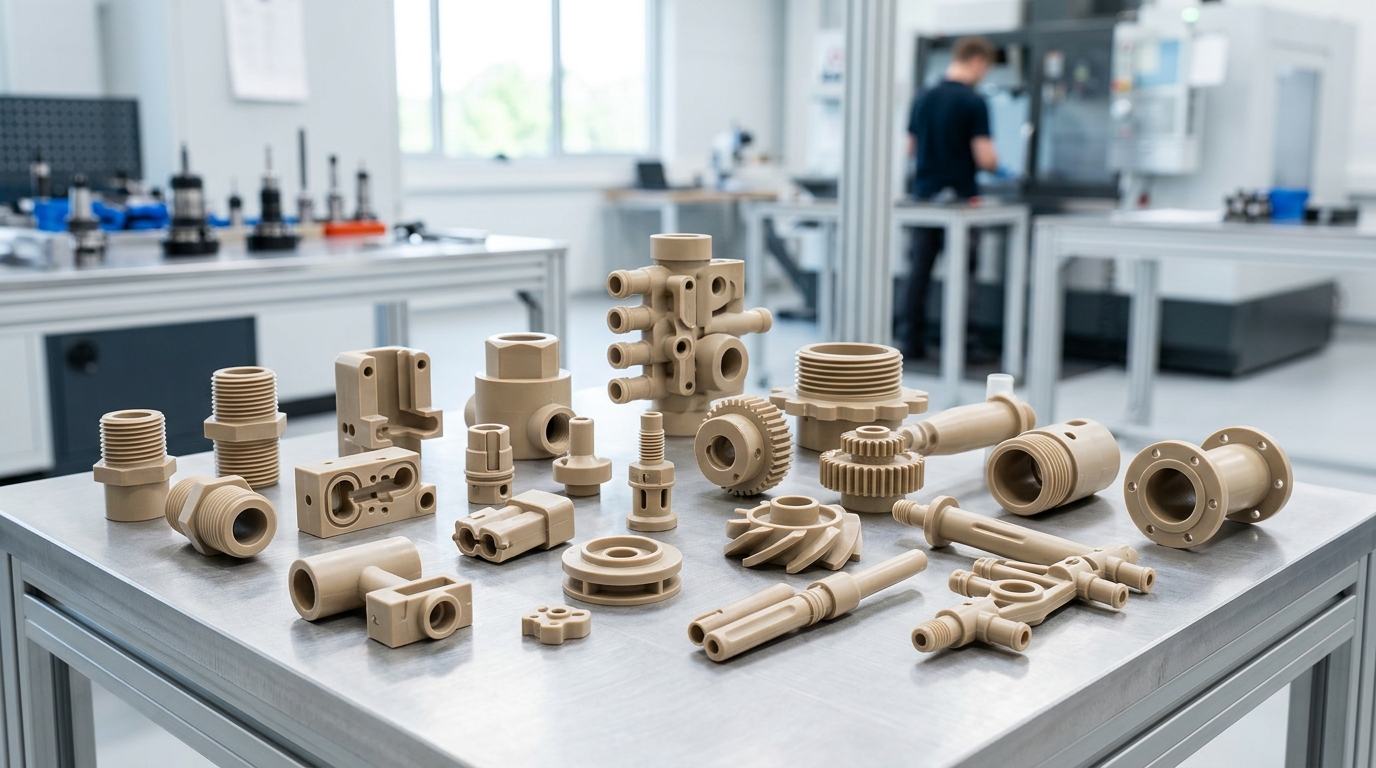
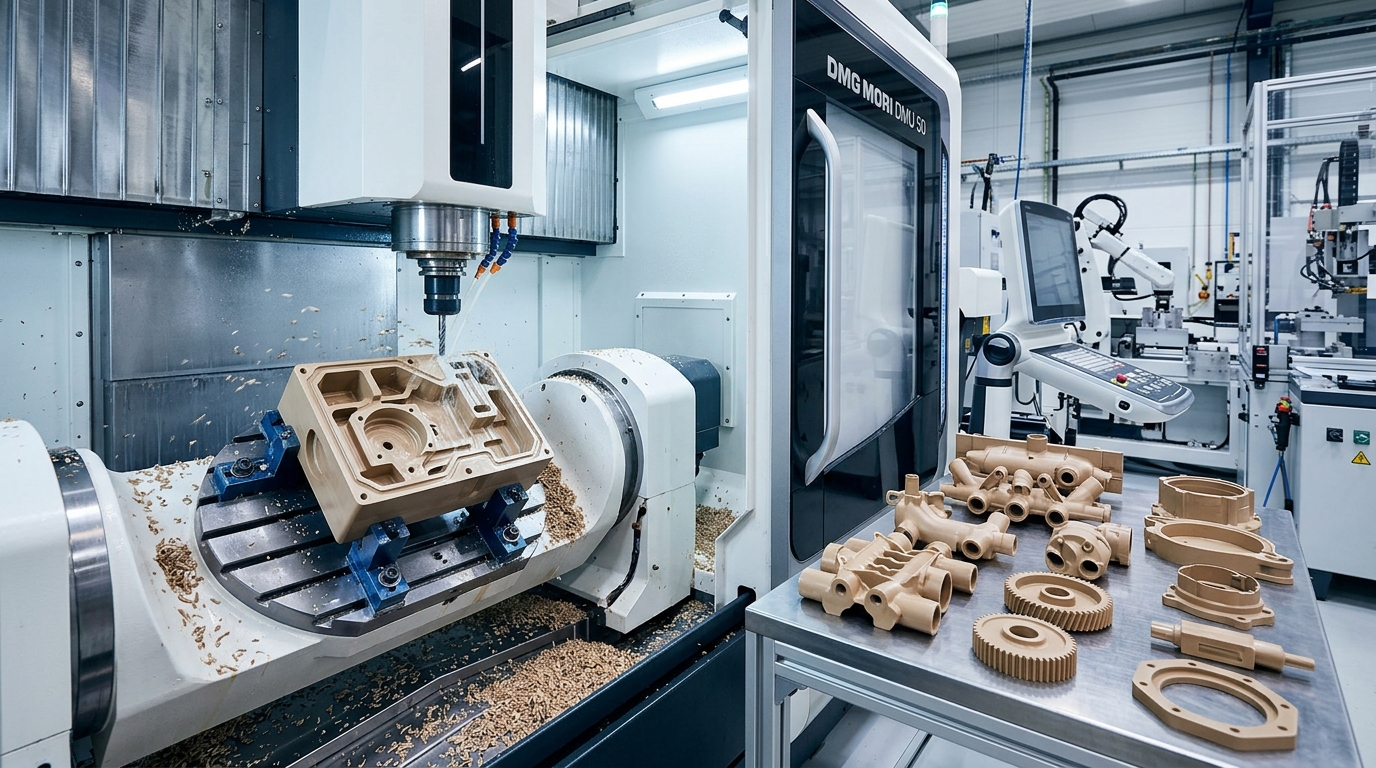
MaterialsPEEK
PEEK machining for high-performance plastic parts and demanding environments.
PEEK often enters the conversation when standard plastics are not enough and teams need a more advanced material for medical, industrial, or high-value technical components.
PEEK
High temperature resistance
Chemical resistance
Strong engineering plastic performance
Best for
01
High-performance plastic components
02
Medical and lab hardware
03
Chemically demanding environments
Key traits
High temperature resistance
Chemical resistance
Strong engineering plastic performance
Lightweight alternative to some metals
Machining notes
PEEK is typically used when cheaper plastics cannot meet the application requirements.
The material cost is higher, so part geometry and quantity should be evaluated with care.
Tolerance expectations should reflect both function and the value of the material itself.
Common finishes
Natural machined finishFine deburringSurface refinement where needed
Common parts
The part families most often matched to this material.
Medical device internals
Lab automation parts
Insulating hardware
Advanced industrial plastic components
FAQ
Common questions about this CNC material.
Why machine PEEK instead of a standard plastic?
PEEK is often chosen because it offers much higher performance in temperature, chemical resistance, and mechanical stability than standard plastics.
Is PEEK expensive?
Yes. PEEK is a premium engineering plastic, so teams usually choose it when the application requirements clearly justify the added cost.
What industries use machined PEEK parts?
Medical, laboratory, electronics, aerospace, and advanced industrial sectors often use PEEK when high-performance plastics are needed.
PEEK
Need PEEK parts for a demanding technical environment?
Send your requirements and part geometry. We will help you confirm whether PEEK is the right engineering plastic for the job.