MaterialsABS and Delrin
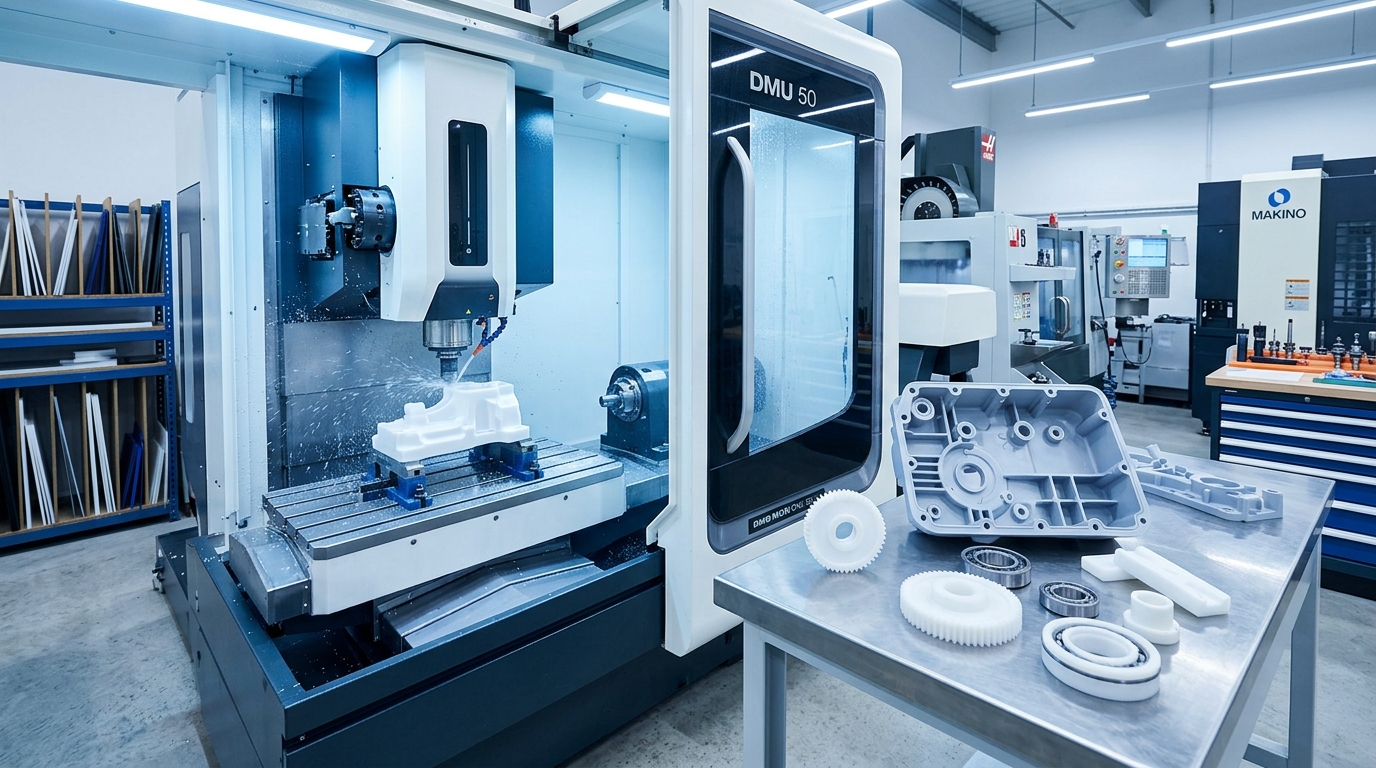
ABS and Delrin machining for prototype plastics and functional production parts.
These plastics are often selected when teams need lighter weight than metal, lower cost than premium polymers, and a practical balance between machinability and end-use function.
ABS and Delrin
Lower weight than metal
Good practical machinability
Useful for prototypes and mechanisms
Best for
01
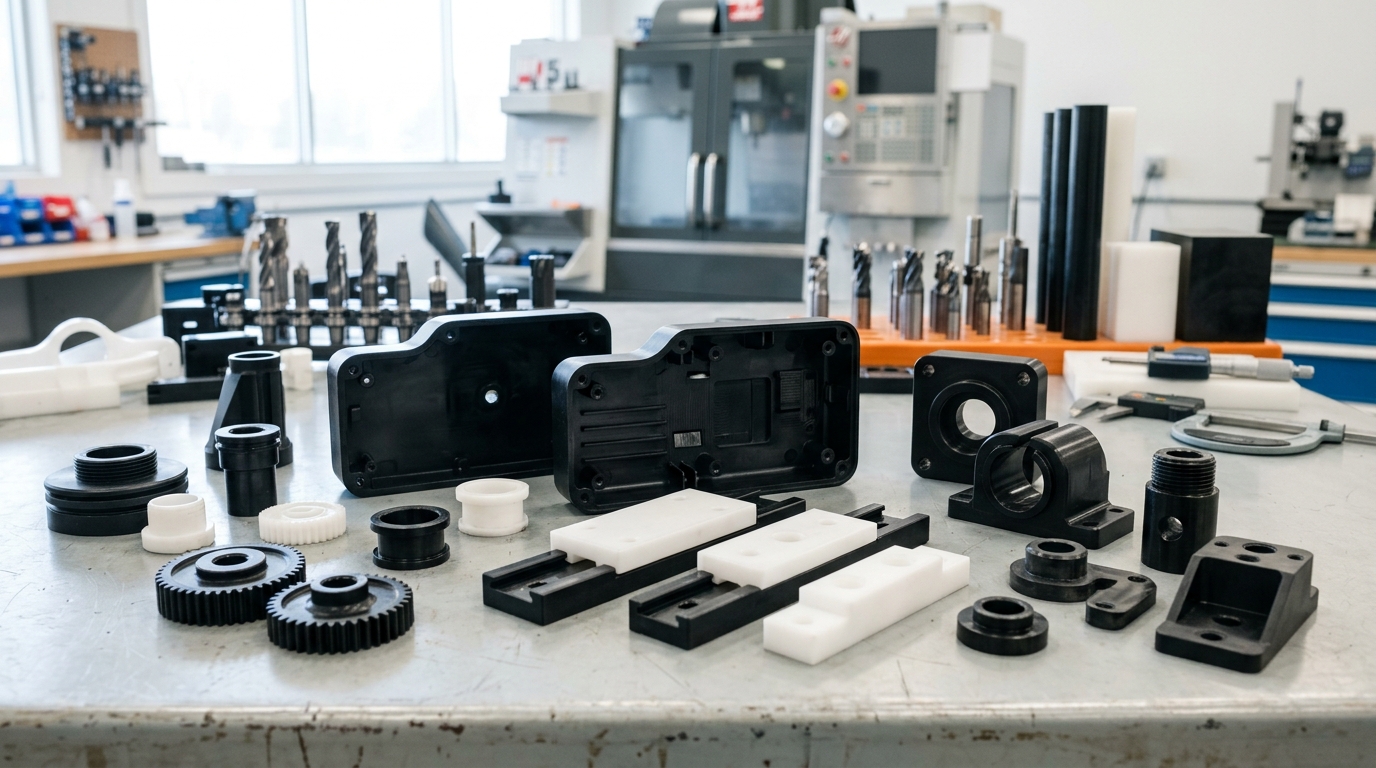
Prototype enclosures
02
Functional plastic mechanisms
03
General engineering plastic components
Key traits
Lower weight than metal
Good practical machinability
Useful for prototypes and mechanisms
Cost-effective versus premium polymers
Machining notes
ABS is often chosen for prototype housings and general-purpose plastic components.
Delrin is frequently preferred for low-friction, dimensional, and mechanical functionality.
Material choice should follow the actual role of the part rather than just the lower-cost option.
Common finishes
Natural machined finishLight texturingPolishing for selected surfaces
Common parts
The part families most often matched to this material.
Prototype housings
Functional sliders
Covers and brackets
General plastic fixtures
FAQ
Common questions about this CNC material.
When should I choose ABS for CNC machining?
ABS is often selected for prototype enclosures, covers, and general-purpose plastic components where speed and practicality matter.
Why choose Delrin over ABS?
Delrin is often preferred for more functional components because it offers better dimensional stability and lower friction in moving assemblies.
Are ABS and Delrin suitable for production parts?
Yes. Both can be used for end-use parts in the right application, especially in lower-volume programs or custom assemblies.
ABS and Delrin
Choosing between ABS and Delrin for a plastic CNC part?
Share how the part will be used and what matters most. We will help you compare plastic fit, function, and cost before quoting.